
































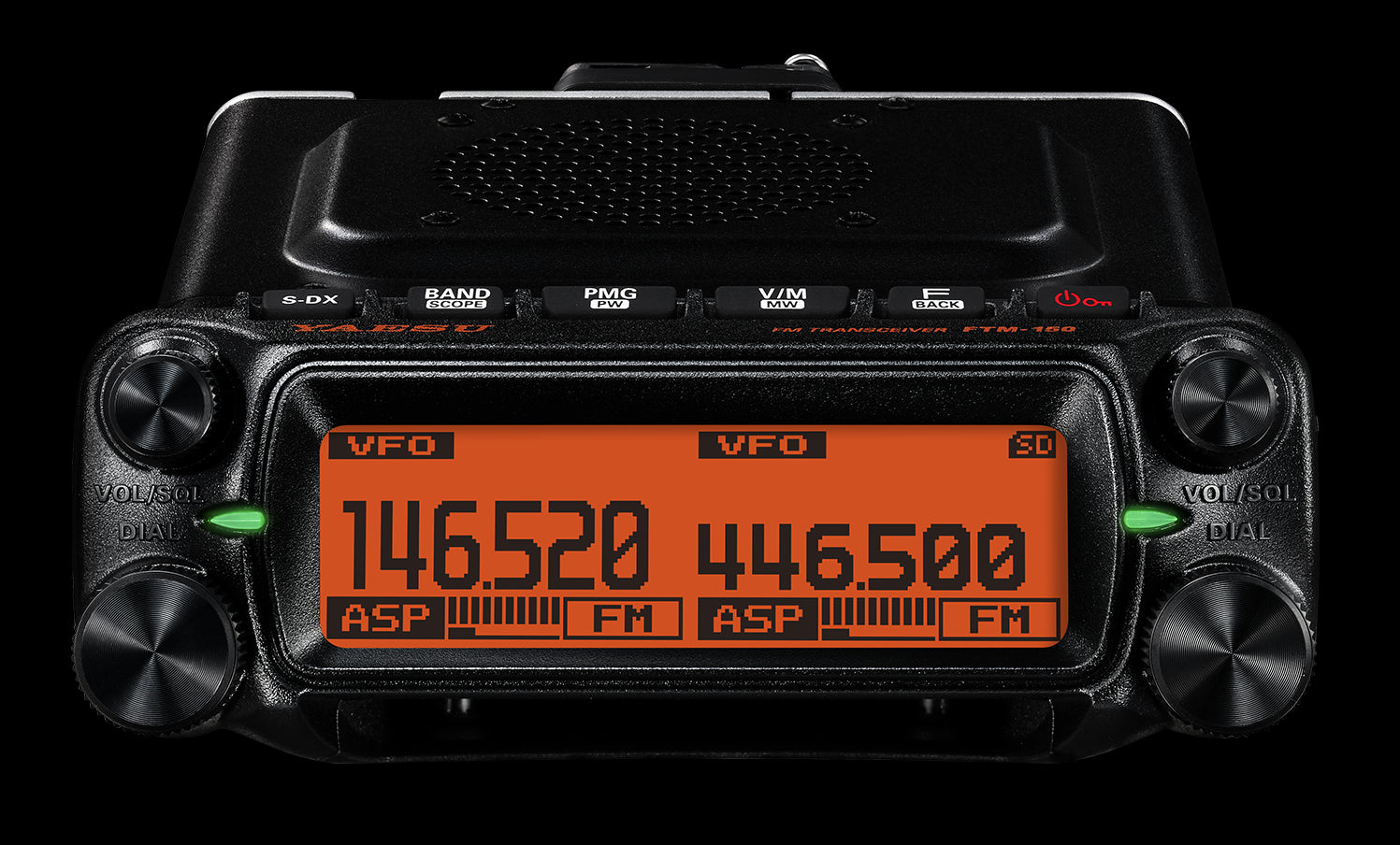
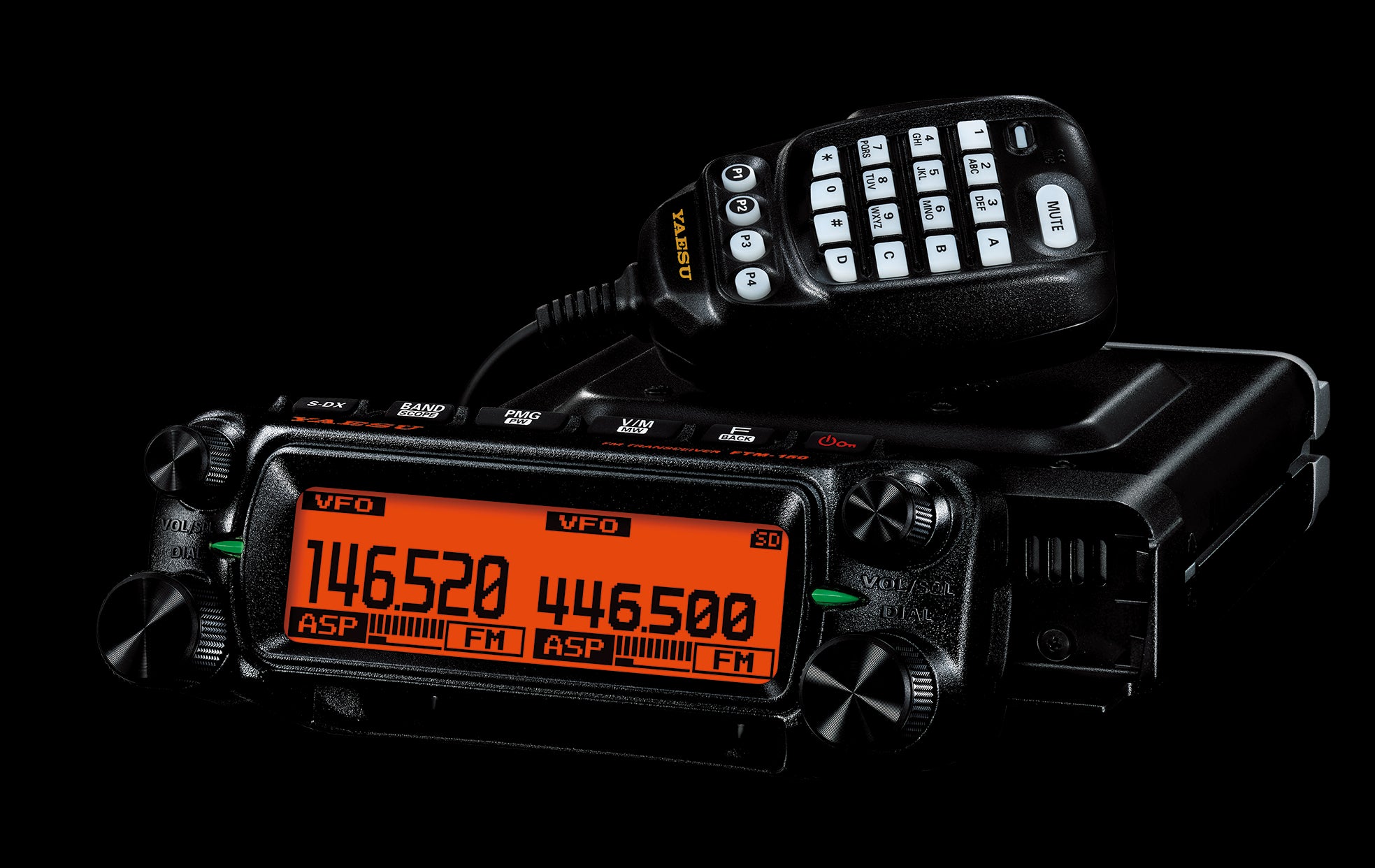
We are pleased to introduce the new 55W (VHF) / 50W (UHF) FTM-150RASP dual-band FM mobile transceiver.
55/50W 144/430MHz Dual Band FM Mobile Transceiver
with the New Evolving Super-DX & Digital Audio Signal Processor
The FTM-150RASP provides true dual-band operation with two distinct receivers on different bands or within the same band (V+V, U+U, V+U, U+V). The full Dot-Matrix display is graphically visible and provides a clear and sharp view of the radio's operating status. The front panel is detachable, and by connecting the optional swivel head - SJMK-500, flexible angle adjustment is possible to suit easy mobile operation.
The output power is 55W on VHF and 50W on UHF (55W / 50W, 25W, 5W is selectable). The Heavy Duty Heat Sink with FACC (Funnel Air Convection Conductor) ensures stable and reliable transmission power.
A front speaker is provided within the control head. The front speaker, in conjunction with the main body speaker, delivers a total high-quality audio of 6W (3W: Front speaker / 3W: Main body speaker). The main body speaker volume level is adjustable (0 - 100%) against the front panel speaker to suit users' preferences.
The Super-DX function increases receiver sensitivity and improves weak signal reception. The new ASP: Audio Digital Signal Processing Unit is also activated when the Super-DX key is pressed. The Super-DX with ASP ensures reliable audio quality for weak signals and expands communication range.
Some noticeable and convenient features of the FTM-150RASP are:
- PMG (Primary Memory Group)
Up to 5 VFO frequencies or Memory Channels can be assigned to the PMG (Primary Memory Group). The receiving status of the PMG channels is displayed in real-time with a bar graph in the PMG screen.
The AUTO or MANUAL mode is switchable by holding down the Main VFO dial during PMG operation. The AUTO mode simultaneously shows up to two channels when signals are received. Transmission is automatically moved to the received channel.
In MANUAL mode, transmission and reception remain on the manually selected channel. The signal received on the other channel is displayed on the screen, and audio can be heard.